
When looking for a quick medical appointment for persistent knee pain, we don’t always ask ourselves whether seeing a general practitioner is essential or whether another healthcare professional can help directly.
Yet choosing the right person at the right time determines how quickly care can be provided and how well it is followed up. Healthcare professionals span dozens of occupations, from doctors and advanced practice nurses to physiotherapists and pharmacists, each with a clearly defined scope of practice set out by regulations.
Seeing an advanced practice nurse directly: when you can bypass your GP
Many people assume they need to see a general practitioner before receiving any other kind of care. In practice, advanced practice nurses (APNs) can be consulted directly in certain coordinated care settings, without a prior referral from a doctor. This arrangement is still regulated: APNs work in coordination with other professionals and within the limits set by regulations.
For example, when monitoring a stable chronic condition (well-controlled type 2 diabetes or stable heart failure), an APN can renew prescriptions, adjust treatments under an established protocol and carry out assessments. This saves time, frees up GP appointments, and ensures follow-up remains safe.
Recent legislation has redefined the nursing role by recognizing nursing consultations as a distinct service, with regulated professional autonomy. For patients, knowing this option exists can make a real difference in areas where waits for a GP appointment are getting longer. Among the professionals at Apss Santé are practitioners who support this approach to making care more accessible.

Choosing the right healthcare professional for your needs
Seeing a GP for every health problem is an ingrained habit, but it isn’t always the best option. Identifying the right professional from the outset can shorten your care journey.
Regulated direct access: who can you see without a prescription?
Several healthcare professionals can be seen without a prior medical prescription. The list varies according to current regulations, but direct access is well established for certain services:
- A physiotherapist for acute musculoskeletal pain, under the direct-access scheme piloted and subsequently expanded in France.
- A pharmacist for advice on a minor ailment, the supply of certain non-prescription medicines, and vaccination.
- An orthoptist for a vision assessment, particularly for children or when renewing an optical prescription.
- A midwife for preventive gynecological care and contraception, without needing to see a gynecologist.
In each case, the professional will refer you to a doctor if your situation falls outside their scope of practice. This safeguard works because each healthcare profession has a clearly defined regulatory framework that sets out which procedures its members are authorized to perform.
When your GP remains the central point of contact
For complex symptoms, an uncertain diagnosis or a need for advanced medical imaging, your GP coordinates your care. Their central role in the healthcare system is not undermined by direct access to other professionals. It’s about complementarity, not replacement.
Local healthcare and medical deserts: what’s changing on the ground
Local healthcare needs vary considerably by profession and region. In some areas, finding a GP who is accepting new patients can feel like an obstacle course. These are precisely the situations in which expanding the scope of practice for other professionals makes sense.
In underserved areas, APNs are becoming a first point of contact for patients who might otherwise wait several weeks to see a GP. Pharmacists, who are present in almost every municipality, play an often-underestimated role as health sentinels: screening, vaccination and support with chronic treatments.
Coordination between these professionals relies on digital tools for sharing information (shared medical records and secure healthcare messaging). When the network works well, patients don’t notice the handoffs between providers. When it doesn’t, tests are repeated, prescriptions overlap and follow-up becomes fragmented.
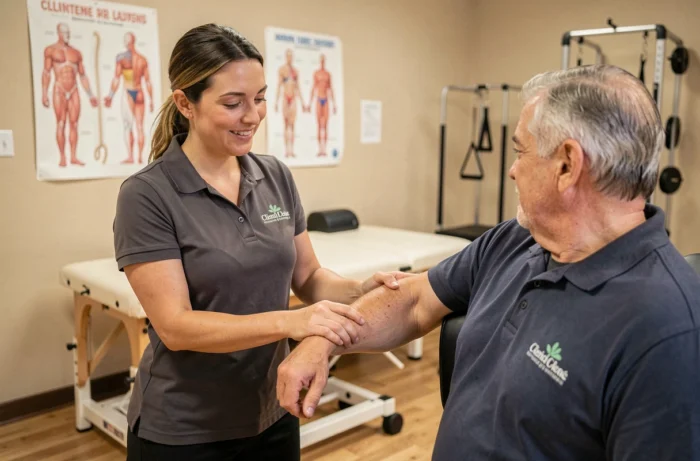
Integrative health and wellness practitioners: understanding the different practice frameworks
The term “wellness” covers very different practices, from osteopathy to sophrology and naturopathy. Only some wellness practitioners work within a regulated framework with a protected professional title. Osteopaths, for example, hold a registered title and follow a regulated training framework. Sophrologists and naturopaths, by contrast, work in unregulated fields.
Integrative health aims to combine conventional medicine with complementary approaches, as a complement to—not a replacement for—the usual care pathway. For patients, the basic rule is simple: check that the practitioner has a recognized qualification or a certification issued by an identifiable organization.
Here are a few practical ways to assess a practitioner:
- Regulated healthcare professionals (doctors, nurses, physiotherapists and midwives) appear in official directories and have an RPPS or Adeli number.
- A reputable wellness practitioner clearly lists their training and certifications and never claims to cure a medical condition.
- Any request from a non-physician practitioner to stop medical treatment is a major red flag.
The line between regulated healthcare and wellness practices is not blurred: it is defined by law. Checking a practitioner’s regulatory status takes two minutes using public healthcare directories, and this simple check can help protect you from harmful practices.
Your healthcare journey is more than a series of appointments. You can make better choices when you know who does what, under which legal framework, and how care is coordinated. Recent legislation on direct access to APNs and the expanded scope of practice for several healthcare professions gives patients practical options—provided they know about them.