The Fall/Winter 2026 season is about more than a checklist of pieces to buy. Recent collections point to three key ways to build a silhouette that deserve a closer look: the return of minimalism through tailoring, the art of color combinations, and the use of statement pieces without visual overload.
1990s minimalist styling: mastering cuts and volume
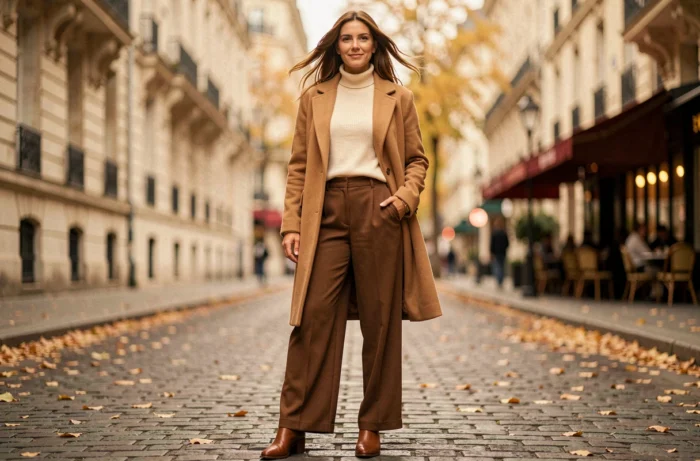
The minimalism making a comeback this season is about more than a neutral palette. It comes through in the cut and construction of garments: natural shoulders, clean lines, understated details. The long coat, a key piece in this trend, stands out with sculptural fastenings and reimagined proportions that refresh the silhouette without piling on the effects.
This focus on structural simplicity changes the way we shop. One well-cut piece (a coat or an unlined blazer with low armholes) can replace three statement pieces that compete with one another. The collections working best this season play on the tension between a relaxed volume and a more fitted finish at the collar or cuffs.
To follow Mode Fashion’s fashion trends in this minimalist vein, opt for fabrics with a substantial drape (felted wool or a wool-cashmere blend) rather than lightweight fabrics that crease easily. The fabric’s natural structure does the shaping that darts did in previous years.

Fall/Winter color combinations: pairings that bring an outfit together
Wearing a trendy color head to toe is a runway instinct that rarely translates to everyday life. The season’s real added value lies in the color combinations seen in the collections: teal and burgundy, brown and rust, navy and off-white.
These pairings work because they follow a principle of moderate tonal contrast. Two shades with similar saturation but different temperatures (one warm, one cool) create instant visual harmony. Teal and burgundy, for example, balance a cool dominant shade with a warm accent without relying on black.
Violet as a standalone accent color
Violet is making its mark this season not as a dominant color, but as a strategic accent on a single piece. Runway collections featured it on coats, bags, shoes, and knitwear. A violet bag with a navy outfit, or violet ankle boots under brown trousers: the color acts as a focal point without throwing off the overall look.
A common mistake is to pile on several colorful accents. A violet piece works precisely because it stands alone against neutrals or a defining color pairing.
Key pieces of the season: choosing between dresses, jeans, and accessories
Rather than listing ten pieces, let’s focus on the choices that really matter when putting together cohesive looks this season.
- The long, straight-cut dress takes the place of the flowing dress from previous seasons. Its straight drape elongates the silhouette and works just as well with ankle boots as with flat derbies, giving it a versatility that pleated dresses lacked.
- Mid-rise straight-leg jeans remain a wardrobe staple, but this season they’re worn with a clean hem, not rolled up. Pairing straight-leg jeans with a long coat creates the vertical line favored by today’s minimalist style.
- When it comes to accessories, the trend favors a single statement piece: a large soft bag or a structured brooch, not both at once. The principle is the same as with an accent color: one standout element per outfit.
The lightweight blazer in Fall/Winter
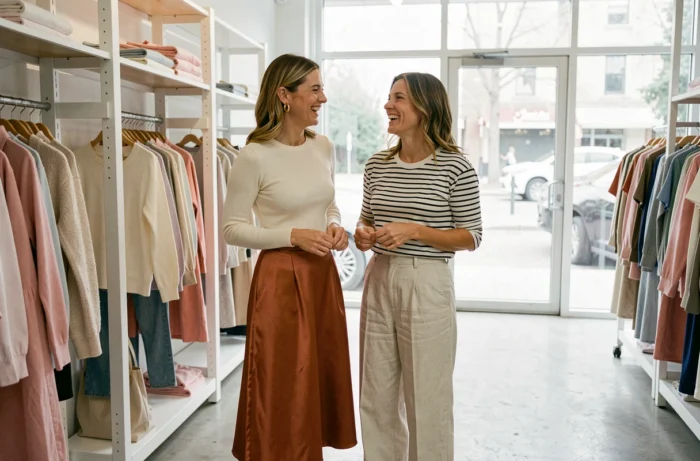
The unlined blazer, a staple of spring collections, transitions into fall in heavier fabrics such as flannel and deconstructed tweed. Worn open over a fine-knit top, it acts as a transitional layer between the outer coat and the base layer, taking on the role cardigans played in past seasons.
Its technical advantage: it defines the shoulders without adding bulk to the torso, making it a good match for fuller silhouettes on the bottom (wide-leg trousers or a midi skirt). This balance of a fitted top and a voluminous bottom is the season’s dominant proportion.
Textile durability and traceability: style criteria in their own right
Traceability is becoming a marker of perceived quality for informed consumers. Knowing a fabric’s exact composition, weight, and place of manufacture helps you anticipate how well it will hold up over time.
In practice, this means choosing a piece with documented materials and manufacturing details is no longer just a statement of values. It’s a reliable indicator of durability, resistance to pilling, and colorfastness after repeated washing.
- Choose fibers with a weight dense enough for the intended garment (a lightweight coat will pill faster than a heavy wool cloth).
- Consider the cost per wear: a more expensive piece worn for three seasons costs less in the long run than replacing a purchase every year.
The Fall/Winter 2026 season rewards wardrobes built around a few carefully chosen pieces. A clean-lined coat, a well-balanced color pairing, a single pop of color, and traceable fabrics are all it takes to express an elegance that doesn’t depend on how many trends you adopt.