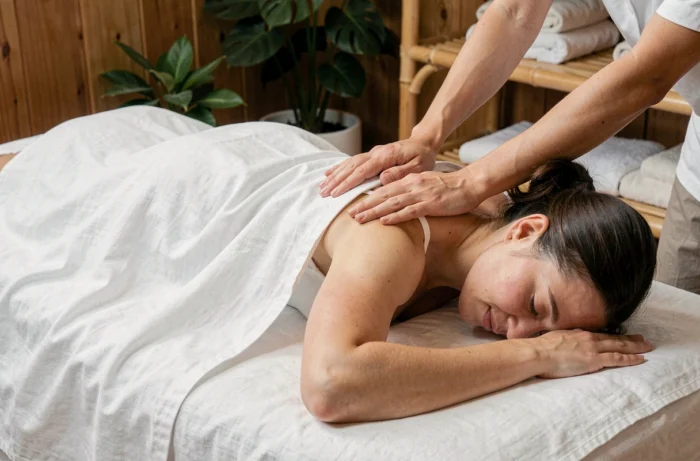
Massage activates several physiological and psychological mechanisms at once, but recent scientific research calls for a closer look at these effects. A 2024 meta-analysis published in Nature Human Behaviour examined various touch-based interventions, including massage, and reported beneficial effects on physical and psychological measures.
It also noted a risk of publication bias and a focus on short-term outcomes. Understanding what massage actually does to the body and mind means distinguishing measured effects from overly broad claims.
Massage and cortisol: what studies really measure
Most articles on the subject claim that massage reduces stress. The commonly cited mechanism involves a decrease in circulating cortisol and an increase in serotonin. This explanation is based on real data, but it needs to be put into context.
The 2024 meta-analysis in Nature Human Behaviour points out that participants know they are receiving a touch-based intervention. The placebo effect and the recipient’s expectations are difficult to isolate. In other words, some of the stress reduction measured after a session may be due as much to the setting (a calm environment, personal attention, a break in the day) as to the massage therapist’s techniques.
This nuance does not invalidate massage. It means that the session’s setting contributes as much as the technique itself to the relaxation people experience. A session in a noisy environment or one that feels rushed will logically have less effect than a session in which the practitioner adapts their pressure and pace to the individual.
Exploring well-being at Les Massages De Tiphaine can help you understand how a practitioner structures a session to combine hands-on techniques with an environment conducive to relaxation.

Physical effects of massage: a comparison by body system
Competitors often list the benefits of massage without ranking them. The table below brings together the best-documented physical effects, grouped by body system, along with the level of evidence in the available literature.
| Body system | Reported effect | Level of evidence |
|---|---|---|
| Muscular | Release of tension, reduction in muscle pain | Well documented and reproducible in the short term |
| Circulatory | Improved local blood circulation | Documented, but temporary |
| Lymphatic | Stimulation of drainage | Documented for specific manual drainage techniques |
| Nervous | Lower cortisol, higher serotonin | Results vary depending on the protocols used |
| Immune | Temporary increase in certain markers | Preliminary data; replication is lacking |
The key takeaway from this table is that muscular and circulatory effects have the strongest evidence, while immune benefits remain exploratory. Relaxation massage reliably affects the muscles and local circulation, supporting its use for relaxation and physical recovery.
Massage and mental health: anxiety, sleep, and mental load
Massage’s effects on the mind go beyond feeling good during a session. Several systematic reviews have examined the link between massage and reduced anxiety. A 2024 review published in the Journal of Osteopathic Medicine confirms positive findings, but notes that studies vary in their techniques and practitioners, making comparisons difficult.
In practical terms, this means that a 60-minute Swedish massage and a 30-minute shiatsu massage will not have the same effects on anxiety, even though both are classified as “massage.” The choice of technique matters just as much as how regularly sessions are scheduled.
Sleep and massage: an indirect link
Massage can help people fall asleep through muscle relaxation and reduced nervous tension. Recipients report better sleep through several pathways:
- Reduced muscle tension makes it easier to find a comfortable resting position, especially for people with neck or lower back pain
- Reduced activity in the sympathetic nervous system (the “alert” mode) after a session creates a window that is conducive to falling asleep
- The regular ritual of a weekly or twice-monthly session establishes a time cue that the body gradually associates with relaxation
Mental load and switching off
A massage session provides a sensory break. The phone is switched off, and outside demands are put on hold. This enforced pause contributes to cognitive recovery, beyond the effects of touch itself. Massage can therefore provide a structured opportunity to switch off, which partly explains why the perceived benefits often go beyond what physiological measurements capture.
Wellness massage and therapeutic massage: an important distinction
Wellness massage (or body modeling) and therapeutic massage address different needs and fall under different frameworks. Therapeutic massage is provided by a healthcare professional (physiotherapist) for treatment purposes, often with a prescription. Wellness massage aims to promote relaxation, prevention, and comfort, without claiming to cure anything.
This distinction has practical implications:
- Wellness massage does not replace a medical consultation for persistent pain or a diagnosed condition
- A wellness massage practitioner is not qualified to make a diagnosis or treat a medical condition
- In France, wellness massage practitioners need appropriate professional liability insurance, separate from the insurance held by healthcare professionals
Persistent pain should be assessed by a healthcare professional before considering a massage for comfort. Wellness massage can be used as a complement, never as a substitute for medical care.
Frequency and consistency: what changes the results
Available studies mainly measure short-term effects, often immediately after a session or in the days that follow. Research has yet to establish a clear answer on the ideal frequency. Practitioners generally recommend a session every two to four weeks for stress management, and more frequent sessions during periods of intense physical or psychological strain.
Regular sessions produce cumulative effects that a one-off session cannot. A single massage provides immediate relaxation. Regular practice establishes a recovery pattern that the body anticipates, gradually enhancing the perceived benefits for sleep, muscle tension, and stress management.
Current scientific evidence confirms that massage affects the muscles, circulation, and stress response, with short-term effects better documented than long-term ones. Session quality, choosing a technique suited to the individual’s needs, and keeping appointments regularly remain the three factors that determine what each person gets out of the practice.