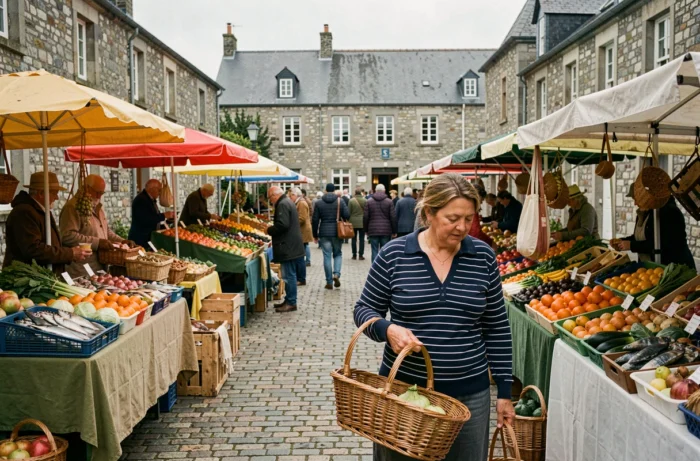
Today, Breton news can be followed through around a dozen online sources, from regional newspapers to community portals. Finding out what’s happening is no longer difficult. The real question comes next: is a festival announced in Crozon, a fest-noz near Rennes or an offshore race in Saint-Malo worth the trip if you don’t know how to get there, what it really costs or what language the event is in?
How accessible is a Breton event? What to check before you set off
An attractive poster tells you nothing about the journey. In Brittany, rail services cover the Rennes–Brest and Rennes–Quimper routes well, but events outside these lines (the Crozon peninsula, Cap Fréhel and towns in central Brittany) require a car or a BreizhGo coach, whose frequency varies by season.
Check the BreizhGo route and its actual timetable for the day to avoid an unpleasant surprise. The regional network publishes timetables by department, but Sunday and public holiday services are often cut in half.
Admission price is another factor. Some festivals advertise free entry on their posters while charging for activities or reserved areas. Others, such as the Route du Rhum village in Saint-Malo, are free to enter but involve additional costs (parking, food on site). For practical information alongside the latest cultural news from the region, Jolie Breizh news regularly brings these details together.
It’s also worth checking the language. Events such as the Deus’ta festival in Brest feature performances in Breton, sometimes without subtitles. Others alternate between Breton and French depending on the time slot. Check the detailed programme (not just the poster) to make an informed choice.
- Transport: check BreizhGo or SNCF services for the exact day, not just whether the route exists.
- Price: distinguish between access to the site (often free) and paid activities inside.
- Language: check the programme to see whether performances are in French, Breton or both.
- Parking: major coastal events (Route du Rhum, Festival du Bout du Monde) fill up car parks. Shuttle buses or park-and-ride facilities are sometimes available.

Autumn events in Brittany: the highlights
Autumn in Brittany brings together a wide range of events. The Route du Rhum, whose village in Saint-Malo drew up to 140,000 visitors in a single day during the 2026 edition, remains the biggest. The Ultim boats’ departure from the Naye lock draws such a crowd that the 1,500-seat grandstands fill up in around 30 minutes.
On a much smaller scale, Équipondi in Pontivy is an example of an event run by young volunteers. This national equestrian competition, in a family-friendly format, attracts a loyal audience every autumn.
The Deus’ta festival in Brest takes a more spread-out approach, with events held at a performance venue, a cinema and a bar. This city-wide format brings together music, theatre and activities celebrating the Breton language, giving each venue its own distinct atmosphere.
Music events beyond the major cities
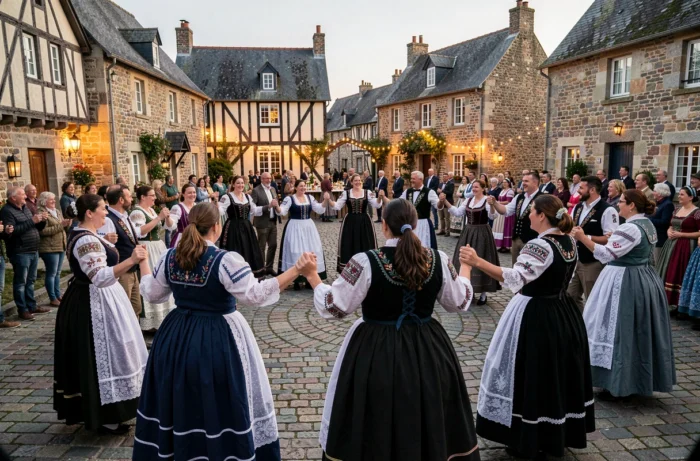
Fest-noz remain a defining feature of Brittany’s events calendar. One recent example was a fest-noz held in a sports hall near Rennes, in Brécé, featuring three Breton bands. These smaller events offer a direct introduction to local culture, without the logistics or cost of a major festival.
In central Brittany and the Côtes-d’Armor, towns and villages put on concerts in community halls in November. Tickets remain inexpensive, and getting there often means just a short drive from the nearest main town.
Online sources for Breton news: where to find reliable information
Keeping up with what’s happening in Brittany means checking several types of sources. Regional newspapers (Ouest-France, Le Télégramme) cover all four departments, with sections for individual towns. France 3 Bretagne adds video coverage and live broadcasts during major events.
Community and association websites complement the press by covering smaller events: local markets, guided hikes and open days at artisan workshops. These events often go unnoticed by newsrooms because no press release is issued.
The Semaine Tous en Scène Finistère (STESF) is a good example. This event gives visitors a behind-the-scenes look at Brittany’s economy and relies on direct registration with participating businesses. It is covered more by local networks and tourist offices than by daily newspapers.
Ecology and cultural programming in Brittany
A new selection criterion has emerged at some Breton festivals: refusing to book bands that travel by plane. This stance, adopted by at least one metal festival in Brittany, reflects a growing trend among organisers to factor carbon footprints into their artistic decisions.
This kind of commitment is not yet widespread, but it is changing festival line-ups. Visitors looking for cultural events that align with their environmental values can now use this as a filter, provided they check the organisers’ charters or announcements.
Restrictions and unexpected changes: plan ahead before travelling in Brittany
Autumn 2026 was a reminder that Breton news is not all about festivals. Water restrictions due to drought, still in force around All Saints’ Day, even affected cemeteries in Brittany.
An “acid flash” event on the Odet, described as unprecedented in France in terms of scale, destroyed the ecosystem along more than 130 kilometres of waterway. Weather and environmental alerts can directly affect access to natural sites.
Before setting off, check the prefectural orders for the department you’re visiting to get the latest information on restrictions (events, water use and traffic). The prefectures of Côtes-d’Armor, Finistère, Morbihan and Ille-et-Vilaine publish these orders online, often the day before or on the morning itself.
Getting the most out of Brittany’s events means planning your trip with the right information: checking the coach timetable, confirming the actual cost and looking at current alerts are all more useful than a poster shared on social media.