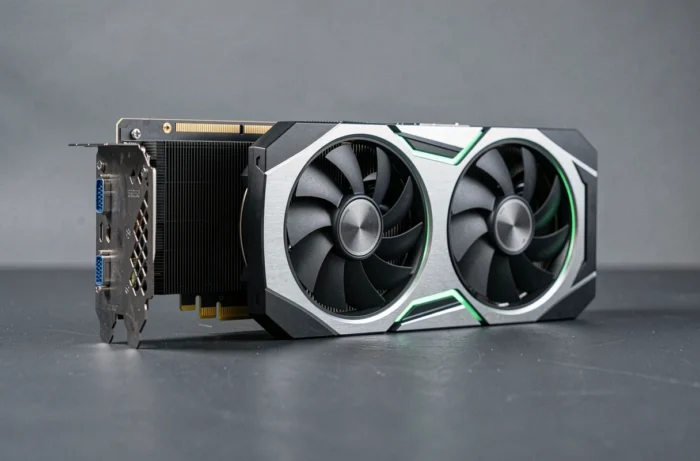
NVIDIA has not announced an official launch date for the GeForce RTX 6000. The release windows being discussed, ranging from 2027 to 2028 depending on the source, come from leaks and analyst reports, not a schedule confirmed by the manufacturer. This uncertainty stems from several factors at once: memory supply constraints, priority given to chips for data centers, and a general slowdown in the consumer GPU upgrade cycle.
RTX 6090 first, RTX 6060 much later: a staggered launch
Competitors treat the question as if the RTX 6000 lineup will arrive all at once. The leaks tell a different story. If NVIDIA follows the pattern used for previous generations, the high-end models will launch first, probably the RTX 6090, followed by the RTX 6080 a few weeks or months later.
The more affordable versions (RTX 6070, RTX 6060) always arrive last. This approach remains consistent with NVIDIA’s business strategy: maximize margins on high-end products before moving down the price ladder.
For gamers looking for a reasonably priced card, the question is therefore not just when the RTX 6000 release date will be confirmed, but which specific model will fit their budget, and when it will actually be available.
Rubin architecture and 3 nm process: what NVIDIA has confirmed and what remains speculative
NVIDIA has officially unveiled Rubin as its next platform. Announcements so far concern chips for data centers and artificial intelligence, not consumer GeForce graphics cards. NVIDIA has not validated any GeForce RTX 6000 specifications.
Leaks point to a 3 nm process at TSMC, a major step forward from the process used for the Blackwell generation. Moving to a smaller process node could bring improved power efficiency and higher transistor density. Rumors also mention next-generation DLSS (sometimes called DLSS 5), which would focus on neural rendering rather than simple upscaling.
The technical specifications circulating for the RTX 6090, RTX 6080, and RTX 6070 come from leakers with varying track records. A few details appear across multiple independent sources:
- The RTX 6090 is said to feature a massive GPU with more VRAM than the RTX 5090, although the exact figure varies between leaks
- The RTX 6080 would be positioned as a versatile high-end model, with a more aggressive performance-to-price ratio than the flagship
- The RTX 6070 would remain the main target for 1440p gamers, but its availability would be delayed by several months compared with higher-end models
Until NVIDIA confirms these specifications, they should be treated as projections, not established facts.
Memory shortages and AI priorities: why the gaming GPU schedule is slowing down
According to a report by The Information cited by several media outlets, NVIDIA is facing ongoing memory supply constraints. This bottleneck affects the entire production chain, from chips for AI servers to consumer graphics cards.
The issue is not purely technical. NVIDIA is prioritizing the production of components for artificial intelligence, a significantly more profitable market than gaming. Data center GPUs generate higher margins, and demand for AI computing shows no signs of slowing. In this context, allocating HBM or GDDR memory to GeForce cards rather than professional accelerators is an economic trade-off that works against gaming.
This trend is not limited to NVIDIA. The consumer GPU upgrade cycle is lengthening across the industry, and AMD’s RDNA 5 lineup is no exception. The strategy of canceling or delaying mid-range lineups (such as the RTX 5000 SUPER, whose launch now appears to be in jeopardy) confirms this trend.
Buy an RTX 5000 now or wait for the RTX 6000
The answer depends on the model you’re targeting and how long you’re willing to wait. For gamers looking at the absolute high end, waiting makes sense if they’re prepared for a potential wait until late 2027 or early 2028. The architectural leap from Blackwell to Rubin, combined with the move to 3 nm, promises a genuine performance boost.
For those looking for a mid-range card, the wait could be even longer. If the more affordable models (RTX 6070, RTX 6060) don’t arrive until months after the flagship, the RTX 5070 or RTX 5080 will remain the practical options for a long time. A card available today at a known price is often a better choice than a hypothetical card with no confirmed release date.
AMD is also worth considering. If the Radeon RX 10000 (RDNA 5) cards face similar delays, competition will not put pressure on NVIDIA’s prices in the short term. However, if AMD manages to launch its lineup before NVIDIA, that could speed up the GeForce RTX 6000 schedule.
- Need a card now for 1440p or 4K: an RTX 5070 Ti or RTX 5080 is more than capable of handling current workloads
- Flagship budget and plenty of patience: waiting for the RTX 6090 may make sense, provided you’re prepared for a likely high launch price
- Mid-range gamer waiting for the RTX 6060: the schedule is too uncertain to plan a purchase around this card
The only certainty here is that there is no official certainty. NVIDIA will share details about the GeForce RTX 6000 when its memory strategy and production schedule allow, not before. Building a purchasing plan around leaks, however consistent they may be, is still a gamble.